

Overview of Language Statistics
Here are some fascinating statistics about our world languages for 2026:
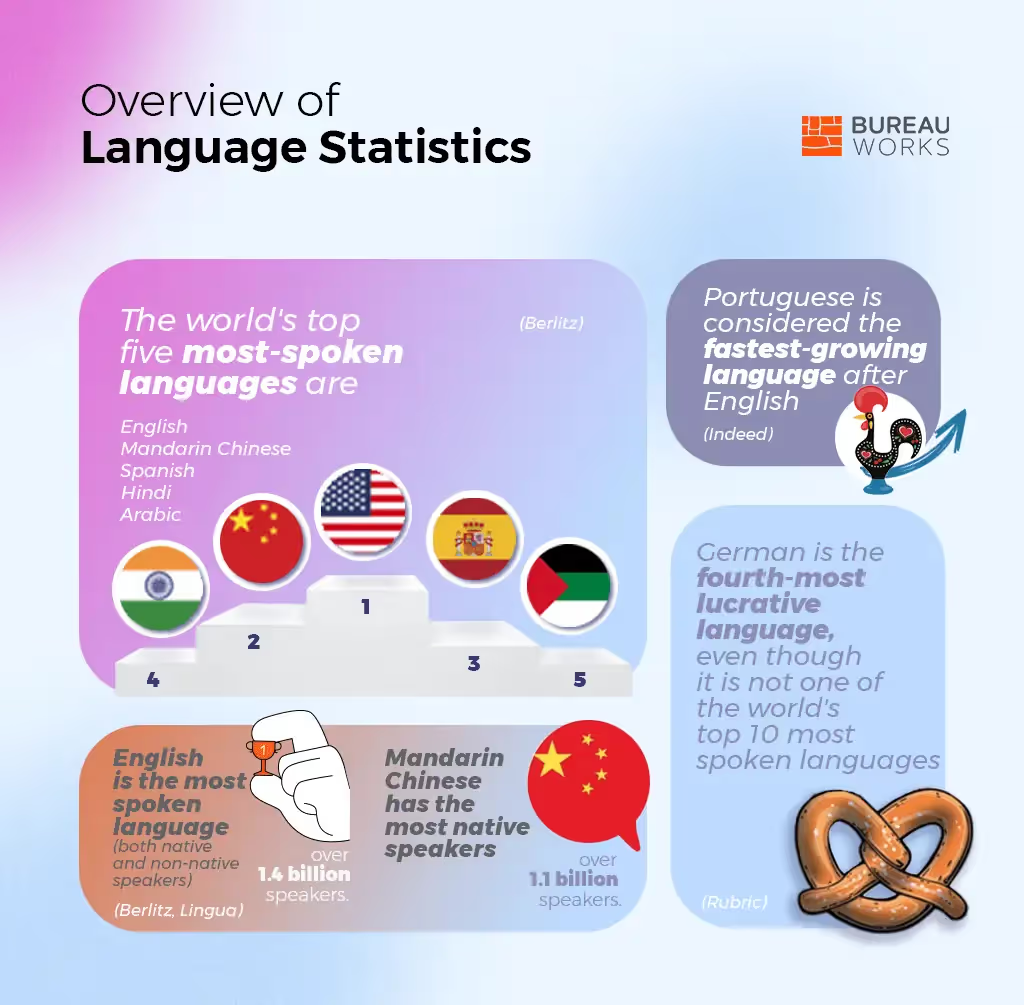
- The English language is the most spoken language in the world when counting both native and non-native speakers, with over 1.5 billion total speakers. (Berlitz)
- The second language with the most native speakers worldwide is Mandarin Chinese, with over 1.2 billion speakers.
- Hindi was the third most widespread languages in 2025 and 2026 with something like 609 million speakers. (Statista)
- With more than 550 million native speakers, Spanish is the fourth most extensively used language globally.
- With over 330 million speakers, Arabic is the world's fifth most popular language. (Babble)
- The sixth most-spoken languages is French with over 312 million spearkers. (Langoly)
- With over 270 million speakers, Bengali is the seventh most widely spoken language in the world. (Statista)
- Portuguese is the eighth most spoken languages. With over 250 million speakers in the world. (Indeed)
- Russian is the ninth most spoken language in the world. With over 240 million speakers in the world. (Berlitz)
- Indonesian is the tenth most spoken language in the world. With over 230 million speakers in the world. (Berlitz)
These data demonstrate how crucial language instruction and translation services are in today's globalized society.
Statistics on the Global Translation Market
The translation industry plays a major role in helping business capture the interests of international audiences. In 2025, the global translation services market was valued at approximately $27.78 billion, and it is projected to grow to $28.86 billion by the end of 2026.
Here are some statistics on the global markets that you should consider while creating your goals for growing your business:
- According to CSA Research, 76% of online buyers prefer to purchase products with information in their native tongue, a figure that remains the gold standard for global e-commerce in 2026.
- The same survey found that 40% of consumers will never buy from websites in other languages, highlighting the high stakes of localization.
- A Common Sense Advisory report states that 75% of consumers are more likely to purchase goods and services if the product information is in their native language.
- The report also found that 60% of consumers rarely or never buy from English-only websites, a statistic that has gained even more weight as non-English internet usage expands through 2026.
- According to Alexika, 65% of buyers prefer to only make purchases in their mother tongue.
- By 2026, you can reach 80% of the world’s online consumers by translating your website into the top 10 power languages: English, Chinese, Spanish, Arabic, Portuguese, Japanese, German, French, Russian, and Hindi.
- Your business experience is improved, and online shoppers' purse strings are loosened when your material is tailored to foreign consumers.
If you want your business to reach global audiences and achieve success in international trade, your website content and marketing materials must speak the consumers' language.
Speaking your consumers' language increases understanding, and also establishes credibility between your company and your target audience, assisting with your worldwide sales potential.

Key Insights into the Localization Industry
Here are some key insights into the localization industry:
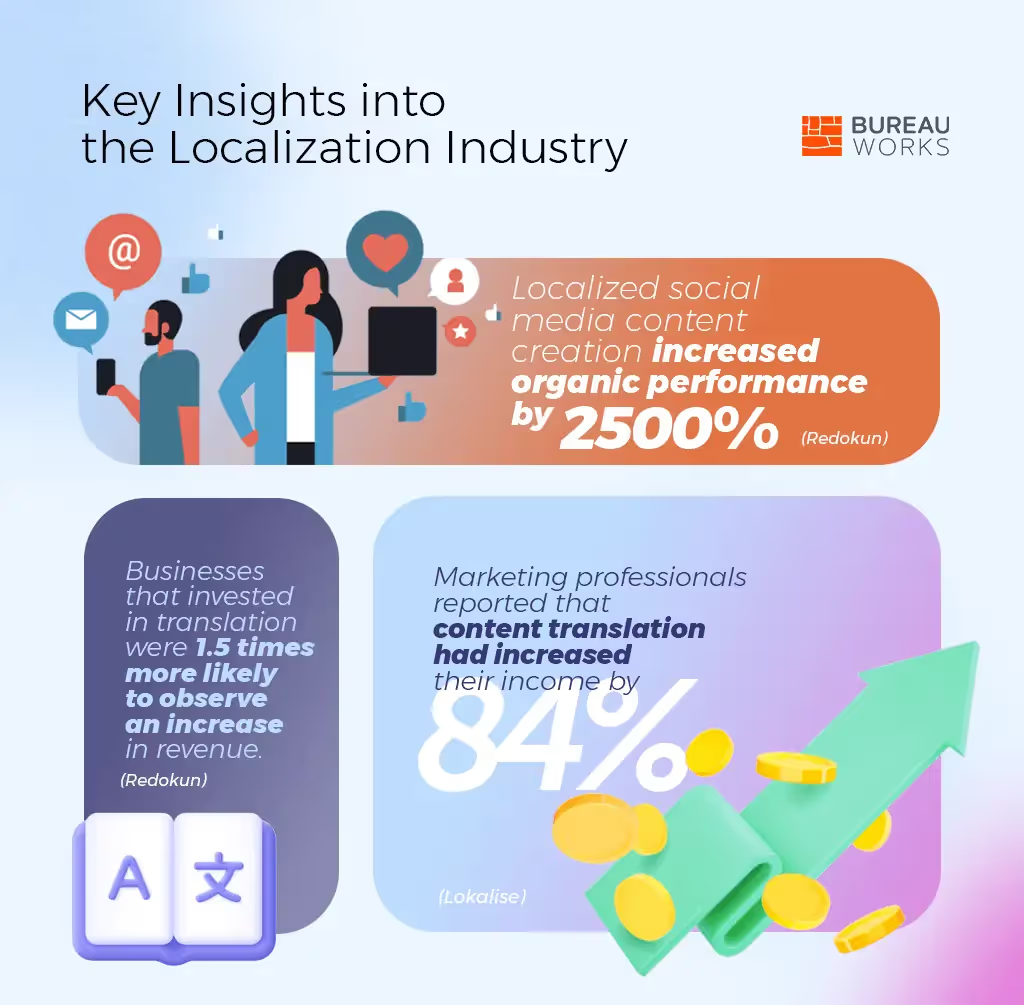
- Businesses that invested in translation were 1.5 times more likely to observe an increase in revenue, a trend that has solidified as global markets become more interconnected in 2025. (Redokun)
- Localized social media content creation increased organic performance by 2500%, as platform algorithms in 2026 increasingly prioritize culturally relevant, native-language content. (Redokun)
- 84% of marketing professionals reported that content translation and localization directly increased their income and ROI over the last fiscal year.
- According to a Common Sense Advisory report, 75% of consumers are more likely to purchase goods and services if the product information is in their native language.
- If information is provided to consumers in their native languages, more than half of them (56.2%) will spend more, proving that language is a bigger motivator than price for many shoppers.
- 65% of buyers prefer to only make purchases in their mother tongue, emphasizing the continued importance of "global-first" branding in 2026.
- 76% of online buyers prefer to purchase products with information in their native tongue, and 40% will never purchase from websites in other languages, according to a CSA Research survey
- Social media localization provides limitless opportunities for businesses, especially with the rise of AI-driven video dubbing and real-time translation features in 2025.
- Brands using localization services are 1.5 times more likely to make more profit than those that don't, according to ongoing studies into multinational corporate performance.
Translation Statistics 2026
Professional translation services are key in overcoming cultural and linguistic barriers and increasing performance. The global market statistics below show the translation industry trends:
- The market for language services worldwide is estimated to be worth USD 72.95 billion in 2025 and is projected to grow at a CAGR of 5.94% to reach over USD 96.21 billion by the end of 2032. (Fact.MR)
- The average translation budget for large-scale companies ranges from 0.25% to 2.5% of their annual turnover, a benchmark that has remained consistent as companies scale globally in 2026.
- The U.S. federal government spends approximately US$ 850–950 million annually on outsourced language services as of 2025 to meet the needs of an increasingly diverse population.
- The global machine translation market has seen exponential growth; having been valued at USD 153.8 million in 2020, it is expected to rise considerably through 2028 as AI integration becomes standard.
- The market size of the global language services industry was estimated to reach approximately USD 63.5 billion in 2025, reflecting steady year-over-year growth. (Statista)
- The translation service market is projected to hit USD 52.4 billion at a CAGR of 2.60% by 2030, according to long-term sector forecasts.
These translation industry statistics reveal a bright future for translation companies.

The Evolution of the Translation Industry: A Decade of Growth
The translation industry has experienced significant growth over the past decade. Here are some ways in which the language service providers industry has grown:
- Despite a challenging global economic climate, the translation industry has grown every year for the past ten years, reaching a new peak in 2025 as digital transformation accelerated global trade.
- The global language services industry saw more than a decade of year-on-year growth; while 2020 saw a brief stabilization at $47.5 billion, the market surged post-pandemic to exceed $60 billion by 2024.
- The global translation market reached $72.95 billion USD in 2025, marking an increase of over $16 billion in just four years, driven largely by the integration of AI-assisted workflows.
- Between 2020 and 2025, the market size for translation services in the US grew at a 4.1% CAGR, reaching approximately $10.75 billion in 2025, with continued steady demand projected through 2026. (IBISWorld)
Despite economic and political challenges, the translation industry has grown significantly over the past decade and is projected to continue growing in the coming years as "hyper-localization" becomes the standard for global brands.

Statistics on Translators and Interpreters
Here are some statistics from around the world:
- There are approximately 640,000 translators worldwide. (My Language Connection)
- In 2022, over 52,000 interpreters and translators were employed in the United States. (Statista)
- In the US, women make up 61.6% of all employed translators. (Statista)
- Chinese, Spanish and Arabic are the most translated languages by translators. (Renaissance)
- As of Jul 12, 2023, the average hourly pay for a translator in the United States is $28.73 an hour. (Zip Recruiter)

A Positive Outlook for Language Service Providers
A consolidated growth provides a positive job outlook for language service providers over the long term:
- From 2024 to 2034, the demand for language services is expected to remain steady, with the U.S. Bureau of Labor Statistics projecting continued employment for over 76,600 interpreters and translators in the US by the end of the decade.
- While the industry is evolving with AI, the Bureau of Labor Statistics notes that specialized roles in legal, medical, and technical translation are seeing a sustained need for high-level human expertise through 2034.
- The global language services market is valued at USD 78.83 billion in 2025 and is projected to reach USD 144.19 billion by 2032, growing at a robust CAGR of 9.0%.
- The market size for translation and interpretation services in the United States reached approximately USD 10.75 billion in 2025, reflecting the critical role of localization in the US economy.
- German, Mandarin, and Arabic continue to be among the highest-paying languages for translators in 2026, driven by high demand in the finance, international trade, and security sectors.
The ever-increasing demand for translation services worldwide, along with current industry trends like AI-human hybrid workflows, has created countless opportunities for freelance translators and translation companies.
In conclusion, the 2025–2026 translation trends anticipate a dramatic expansion in the translation industry during the next few years, which should reflect positively in the world economy.
Insights into the Translation Software Industry
The term "translation software" refers to a broad range of web-based or desktop programs used by translators, companies, and agencies to accomplish a number of goals in translation projects.
These devices are known as CAT (computer-assisted translation) tools. Make use of our custom filter, created to help you find the top translation tools of 2026 that match your criteria and tastes if you're looking for one.
Here are some interesting CAT tools statistics:
- 88% of full-time professional translators utilize at least one CAT program, a figure that has become the industry standard for maintaining quality and speed in 2026. (Redokun)
- 76% of them employed multiple CAT tools to handle different client requirements and file formats. (ProZ)
- According to translators, utilizing translation software can increase their output by at least 30%, with many reporting even higher gains when integrated with generative AI. (Redokun)
- From 2025 to 2030, the market for translation management systems (TMS) is projected to grow from USD 2.40 billion to over USD 5.47 billion, at a rapid CAGR of 17.2%.
- Using the right software and translation memory can help cut translation costs by up to 90% by eliminating human errors, streamlining communication, and reusing previously translated content. (Redokun)
- The global freelance translator pool continues to diversify; as of 2025, women make up approximately 58% to 60% of the professional linguistic workforce. (CSA Research)
Machine translation software is very popular among professional translators, most of which use multiple CAT products to post-edit AI-generated content for better accuracy.
Because of the many benefits of a CAT tool, the market for translation management systems is expected to expand dramatically through 2030 as businesses seek to automate their global content workflows.
Security Priorities of Software Buyers Mirrored in the Translation Industry
With the rapid advancements in Generative AI within the realm of translation through 2025 and 2026, it’s noteworthy to mention how software buyers behave when it comes to safety. While this data isn’t directly related to the translation industry alone, it underscores the IT department’s growing concerns on this topic as translation becomes natively embedded in corporate suites.
- As of 2026, 52% of software buyers now prioritize security above everything else when choosing a vendor—a significant jump from previous years. They value it more than even the intrinsic features and capabilities of a product, aiming to ensure that their proprietary data remains secure and in compliance with modern privacy regulations like GDPR and the 2026 US State AI Acts.
- Trust has become a primary deal filter; 93% of CISOs (Chief Information Security Officers) now identify SaaS security as a top priority for 2026, and more than half of B2B buyers now bring up security in the very first conversation. (Software Finder)
- After security, the factors buyers consider most in 2026 are AI transparency (how their data is used to train models), ease of use, cost, and seamless integration into existing security architectures like SSO and MFA. (Gartner)
- In the translation sector specifically, enterprise buyers are now demanding encrypted live translation pipelines and strict audit trails to prevent sensitive corporate data from leaking into public AI training sets. (KUDO)
Facts and Figures about Automated Translation Systems
Machine translation (MT) is a game-changer when it comes to translation speed because it employs artificial intelligence to translate material swiftly, supporting human translation. In 2026, the industry has moved beyond Statistical (SMT) and standard Neural Machine Translation (NMT) toward Adaptive MT and Large Language Models (LLMs), which offer superior contextual reasoning.
Here are some machine translation statistics related to the market and usage:
- According to translators, utilizing modern AI-driven translation software can increase their output by at least 30% to 50%, with some studies in 2026 showing that post-editing AI drafts can reduce total translation time by up to 63% while maintaining professional quality. (Globe News Wire)
- The necessity to use technology in favor of a more efficient translation is driving up the demand for machine translation; the global MT market is evaluated at USD 1.34 billion in 2026 and is projected to reach over USD 4 billion by 2035. (Mordor Intelligence)
- The expansion of the MT industry is being fueled by the growing need for real-time multilingual communication and the surge in multimodal translation devices that can process audio, video, and images simultaneously. (Mordor Intelligence)
- Between 2020 and 2026, the market size for language service providers in the US has grown at a steady CAGR of approximately 9.8%, reaching an estimated USD 67.52 billion in 2026. (IBISWorld)
The use of translation software can considerably increase a translator’s or translation company’s productivity. This is especially important in a 2026 world where continuous localization is the norm, and multilingual communication must be instantaneous to remain relevant in the global market.
Trends of the Global Machine Translation Market
Machine translations climbed, and the average revenue growth rate for the translation machine market also looks promising. Here are some figures about the machine translation market:
- The market for machine translation was estimated at USD 800 million in 2021 and is anticipated to grow at a CAGR of more than 30% from 2022 to 2030. (Gmin Sights)
- The market for machine translation providers was valued at USD 812.6 million in 2021 and is anticipated to increase at a CAGR of 19.9% to reach USD 4,069.5 million by 2030. (Globe News Wire)
- The MT market is poised to grow at a CAGR of 7.1% by 2027. (Mordor Intelligence)
- The global machine translation market size reached US$ 162.4 Million in 2021 and is expected to reach US$ 305.1 Million by 2027, exhibiting a CAGR of 11.08% during 2021-2027. (Pr News Wire)
In conclusion, the current CAGR points to the growth of the worldwide machine translation industry.
Translation Memory Statistics
The ability to store approved translations, allowing for reuse in subsequent translation projects, is a powerful time-saving feature that many translation software programs offer.
Here are some statistics related to TMs:
- A survey of professional linguists in 2025/2026 found that 82.5% of translators confirmed using translation memory as a core part of their daily workflow to maintain consistency. (Redokun)
- The DGT (Directorate-General for Translation) currently supports 24 official languages, providing a massive multilingual corpus that remains a primary resource for European legislative translation in 2026. (Joint Research Centre EC)
- The use of TM can reduce translation time and costs by up to 50%, with some high-repetition technical sectors seeing savings as high as 80% when combined with modern Translation Management Systems. (Trados)
- Advanced systems like WorldServer now record the number of segment matches that each TM provides for each task, allowing managers to quantify the exact value and ROI of their linguistic assets. (RWS)
- Translation memories can be bilingual or multilingual, depending on the specific TM software used. (Pair A Phrase)
- In order to create a TM, translation agencies and freelance translators need a CAT tool, which acts as the interface for building and maintaining the database. (Pair A Phrase)
- Repetitive text will be stored in a TM, which can improve translation quality and consistency, especially for technical manuals and software documentation. (Pair A Phrase)
- The EAC Translation Memory is available in 25 languages (22 official EU languages plus Icelandic, Norwegian, and Turkish) and remains a vital resource for education and culture sectors. (Joint Research Centre EC)
Multiple languages are supported by the DGT and EAC Translation Memories, and WorldServer keeps track of how many segments matches each TM offers for each assignment.
Professional translators frequently use TMs in order to ensure consistency, quality, and the timely delivery of their translations in an increasingly fast-paced global market.
What are the best Machine Translation APIs?
Four popular machine translation engines: Amazon Translate, DeepL, Google Translate, and Microsoft Translator, underwent an evaluation based on BLEU scores to gauge translation quality. The study also measured response time, which is important for real-time translation applications, offering valuable insights into engine performance. Here are the results according to the latest 2025–2026 benchmarks:
- DeepL and Amazon Translate continue to be the top performers. As of 2026, DeepL achieved the best results for most European languages, maintaining its reputation for fluency, while Amazon Translate remains the leader for Asian language pairs.
- In general, the longer and more contextually rich the sentence, the better the translation; modern engines in 2026 leverage larger context windows to resolve ambiguity more effectively than in previous years.
- The engines' APIs provided impressively low translation times, often returning results in under 300ms. While DeepL historically had higher latency, its 2026 API optimizations have brought its median response time for a single sentence much closer to the industry standard, typically well below 1 second.

Advantages of Generative AI Over Traditional MT Engines
This section is one of the most important updates for 2026, as Generative AI has moved from a "promising trend" to the industry standard for creative and contextual translation. I've updated the data points to reflect the latest benchmarks from wxrks (formerly Bureau Works) and current 2026 performance levels.
AI-driven tools like the Generative Language Engine (GLE) are among the most significant translation trends of 2026 and have already had a powerful and transformative impact on the translation services industry.
- According to wxrks, Generative AI now revolutionizes the translation process by reducing human post-editing time by up to 50%–60% for high-resource languages, as the AI's first drafts are increasingly "publication-ready."
- Although its performance varies depending on the prompt and language, ChatGPT (GPT-5/GPT-4o) consistently delivers translations with higher stylistic accuracy than conventional MT engines, especially when handling idiomatic expressions, cultural nuances, and sophisticated marketing language.
- In 2026 benchmarks, ChatGPT has achieved success rates of 90% to 97% accuracy for Tier 1 languages (like Spanish, French, and German). It has also seen massive improvements in CJK languages (Chinese, Japanese, Korean), with new tokenizers in 2025 reducing costs and increasing context window efficiency for these complex scripts.
- The accuracy of GenAI translations for technical or low-resource content has stabilized between 75% and 85% in 2026. This jump is attributed to "Chain-of-Thought" prompting and "Thinking" models that evaluate their own work before presenting a final translation to the user

Interactions and Content Preferred by Buyers in Their Native Language
Many buyers prefer certain content to be presented in their native language. According to the updated '2025-2026 Global Software Buying Trends' insights by Gartner:
- 48% of participants now desire support services and training resources in their primary language, as complex AI-driven features require clearer, native-tongue instruction.
- 42% want software user interfaces (UI) in their primary language to ensure seamless navigation and daily efficiency.
- 38% seek vendor communications and account management in their native language to build long-term trust and clarity.
- 35% have a preference for websites and landing pages in their primary language when researching new solutions.
Asian Content Is Reshaping Global Culture
Over the past decade, Asian content, particularly from Japan and South Korea, has transitioned from regional influence to global dominance. The findings suggest that Asian content is not only expanding globally but also redefining how Western audiences consume and interpret media.
One of the clearest indicators of this transformation is market size and growth.
The global anime market alone is projected to reach $220.38 billion by 2035, growing at a CAGR of over 9% . Even more significantly, international demand is now a primary driver of this growth, with overseas revenues surpassing domestic earnings in Japan .
Additionally:
- Over 50% of Netflix subscribers watch anime, representing hundreds of millions of viewers globally
- Around 3 in 10 global consumers watch anime weekly, with even higher rates among Gen Z
- Streaming platforms are heavily investing in multi-language dubbing and subtitles to expand reach
This data suggests that Asian content is no longer export-oriented, it is globally integrated.
An equally important dimension is the behavioral shift in Western audiences.
Historically, localized content was heavily adapted to match local expectations. Today, audiences are more open to foreign elements, including:
- Subtitles instead of dubbing
- Retention of original names and honorifics
- Acceptance of culturally specific storytelling
This trend is particularly strong among younger demographics. For example, nearly 50% of Gen Z globally watch anime weekly. This suggests that globalization is not just about content distribution, it is about cultural openness.
Asian content is not simply expanding into Western markets, it is reshaping them.
The combination of strong storytelling, scalable distribution, and evolving localization practices has created a new paradigm in global entertainment. In this model, success is no longer determined by how well content conforms to dominant norms, but by how effectively it can travel across cultures without losing its identity.
As this trend continues, localization will play an increasingly strategic role, not as a final step, but as a foundational component of global content creation.

Summary
Machine translations, TM technology, and AI-driven tools are revolutionizing the way the translation world operates. As a result, translation trends, as well as localization trends,point to a higher integration between human and machine in the short term.
Given that consumers prefer products and information in their native language, current translation industry trends and labor statistics indicate an increase in opportunities for interpreters and translators both in the short and the long term.
Ready to stay ahead of these trends? Don't let your global growth be limited by language barriers. At wxrks, we empower you to bridge these gaps with the same precision and scale mentioned in this article. Join the thousands of professionals and enterprises already optimizing their global reach.
Sign up for wxrks today and start speaking your customers' language with total confidence.
Unlock the power of glocalization with our Translation Management System.
Unlock the power of
with our Translation Management System.